Below is a practical guide for businesses facing visits by Immigration and Customs Enforcement Administration (ICE).
For immediate assistace contact us at:
hello@warrenkalyan.com
(512) 347-8777
Recent U.S. Immigration and Customs Enforcement Administration (ICE) activity has increasingly targeted the industries we serve, which rely on large, diverse workforces, including restaurants, bars and other hospitality businesses, multifamily residential real estate operators and their servicing supplier-partners’ businesses, construction companies, and many other service businesses.
These visits can be disruptive, intimidating, and legally complex if not handled correctly.
This guide is designed to help business owners, managers, and team members understand what ICE can and cannot lawfully do, and how to respond calmly and correctly to protect the business. This guide does not encourage evading the law. It explains how to comply with the law, and only the law.
Many business owners are unaware that ICE does not automatically have the right to enter all areas of a business.
Understanding the difference between lawful authority and administrative pressure is essential.
Why This Matters for Business Owners
Public vs. Non-Public Areas of Your Business
Public areas
Areas open to the general public (e.g., dining rooms during service hours).
Non-public areas
Areas not open to the public, including:
Kitchens
Back offices
Storage rooms
Employee-only spaces
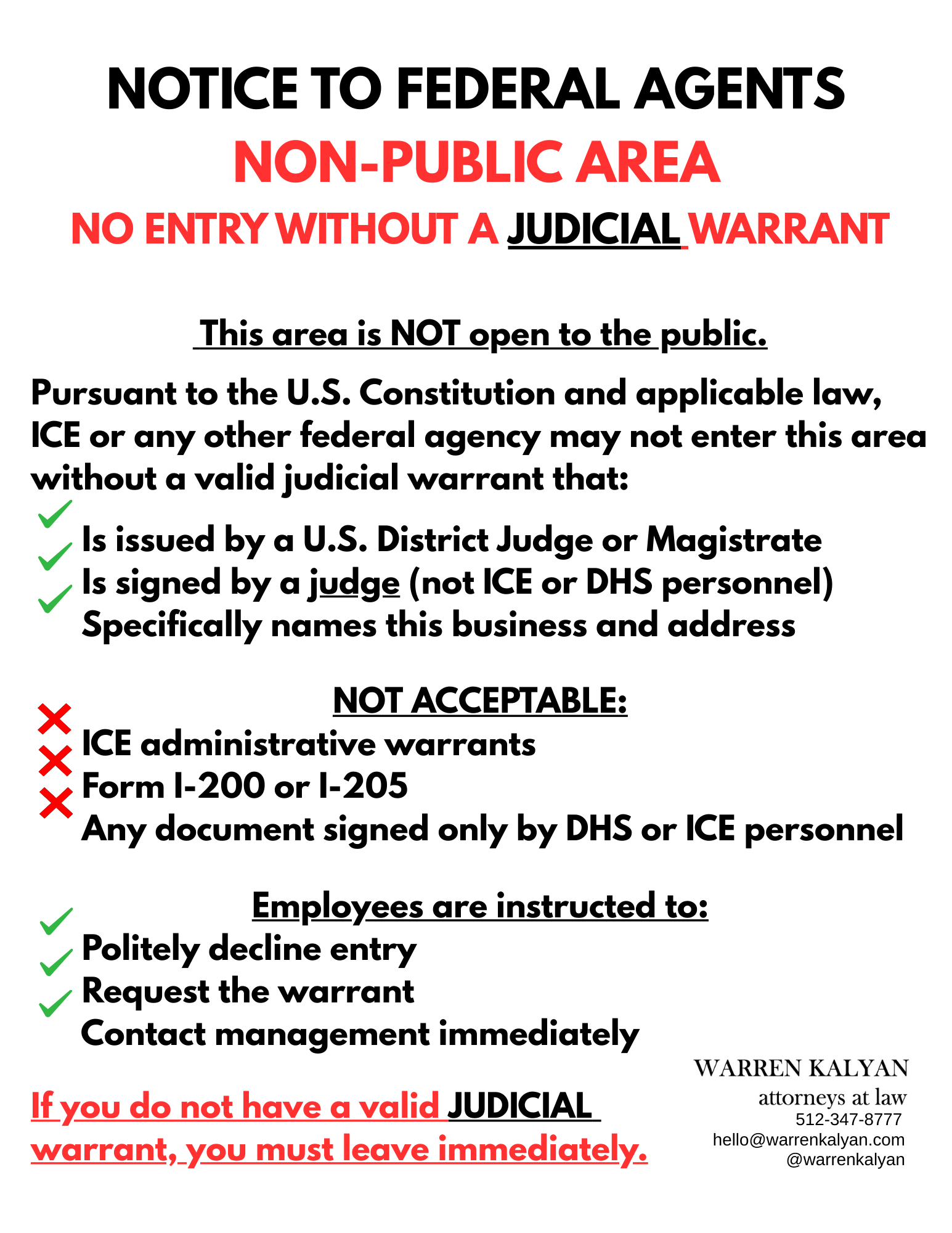
ICE may not enter non-public areas without a valid judicial warrant.
Posting clear signage designating non-public areas is an important protective step.
What ICE Must Have to Enter Non-Public Areas
To lawfully enter non-public areas, ICE must present a valid judicial warrant that:
✔ Is issued by a U.S. District Judge or Magistrate
✔ Is signed by a judge (not ICE or DHS personnel)
✔ Specifically names the business and address
NOT acceptable:
✘ ICE “administrative warrants”
✘ Form I-200 or I-205
✘ Any document signed only by DHS or ICE personnel
If these requirements are not met, the business is not required to consent to entry.
What Employees Should Do If ICE Appears
Employees should be trained to:
Remain calm and professional
Decline entry to non-public areas politely but firmly
Ask to see a judicial warrant
Immediately notify management
Avoid answering questions beyond basic job-related information
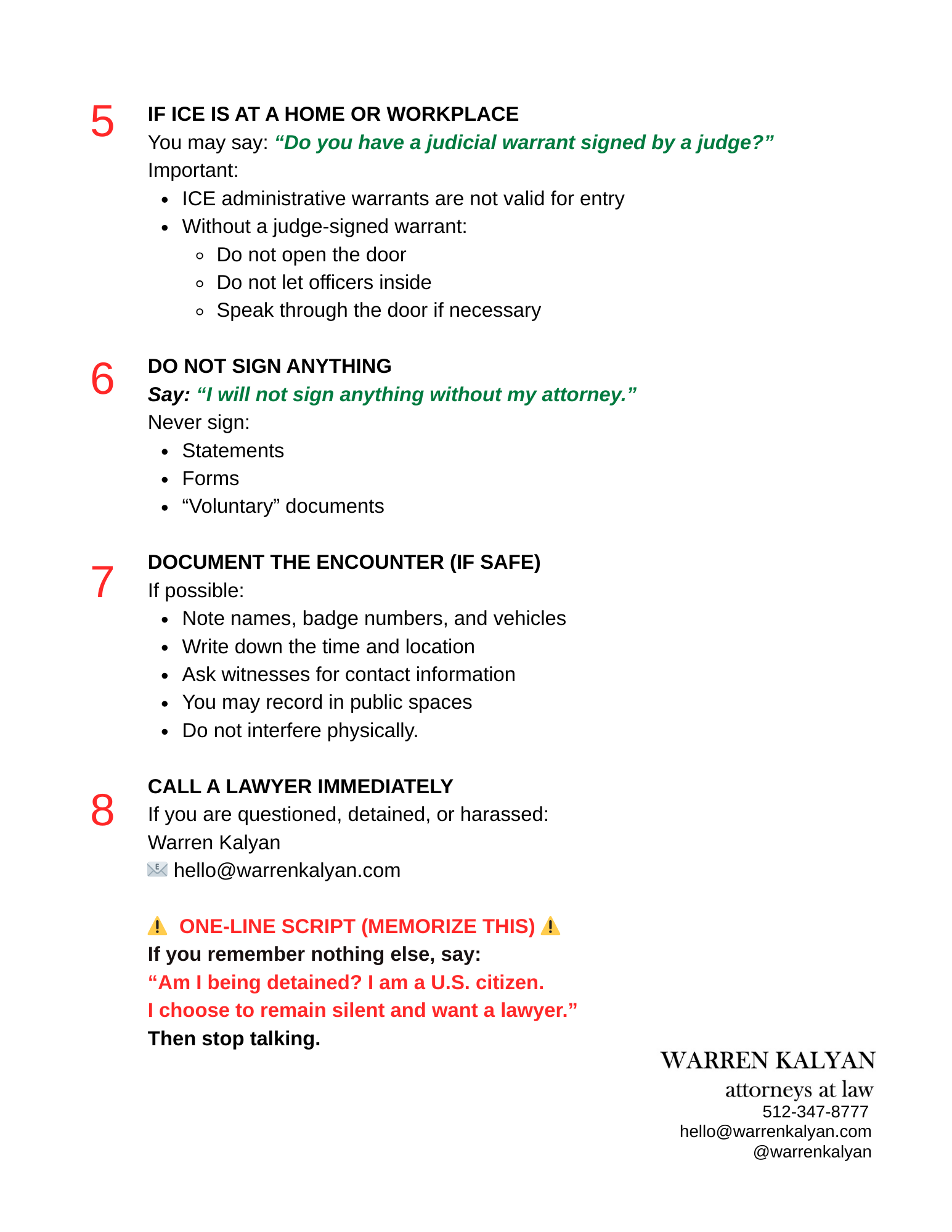
Never sign anything
Employees should never argue, interfere, or physically block entry.
What Owners and Managers Should Do
If ICE appears:
Review any warrant carefully before consenting to entry:
Is it issued by a U.S. District Judge or Magistrate?
Is it signed by a judge (not ICE or DHS personnel)?
Does it specifically names this business and address?
Limit access strictly to what the warrant authorizes
Document the interaction (names, agencies, time, scope)
NEVER sign anything
Contact legal counsel immediately!
What This Guide Does Not Do
This guide does not:
Encourage hiding individuals
Obstruct lawful enforcement
Provide individual immigration advice
It exists to ensure lawful compliance and protection against unlawful searches or intimidation.
Contact a Lawyer Immediately
Contact counsel if:
ICE requests access to non-public areas
Paperwork appears administrative or unclear
Employees appear pressured or intimidated
Operations are disrupted or threatened
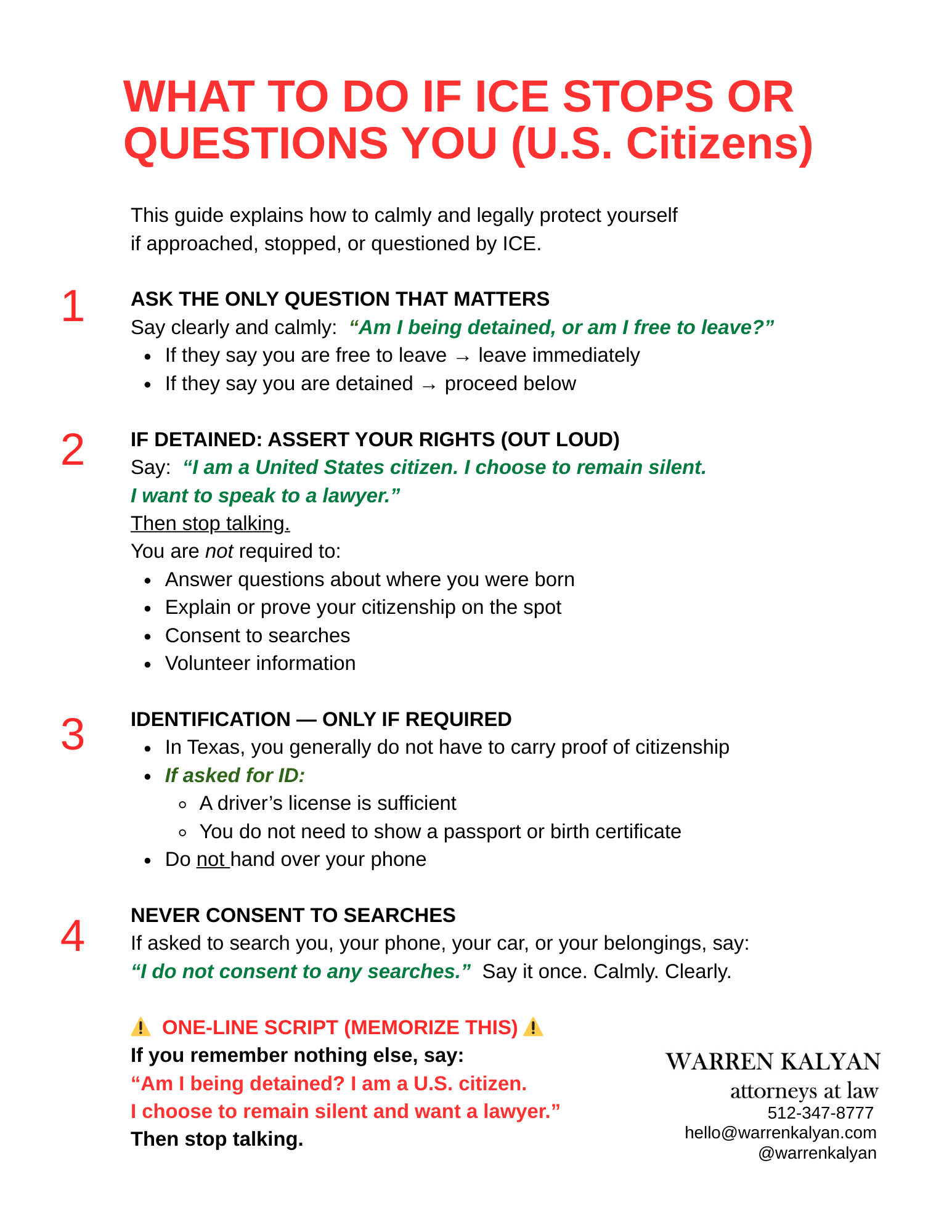
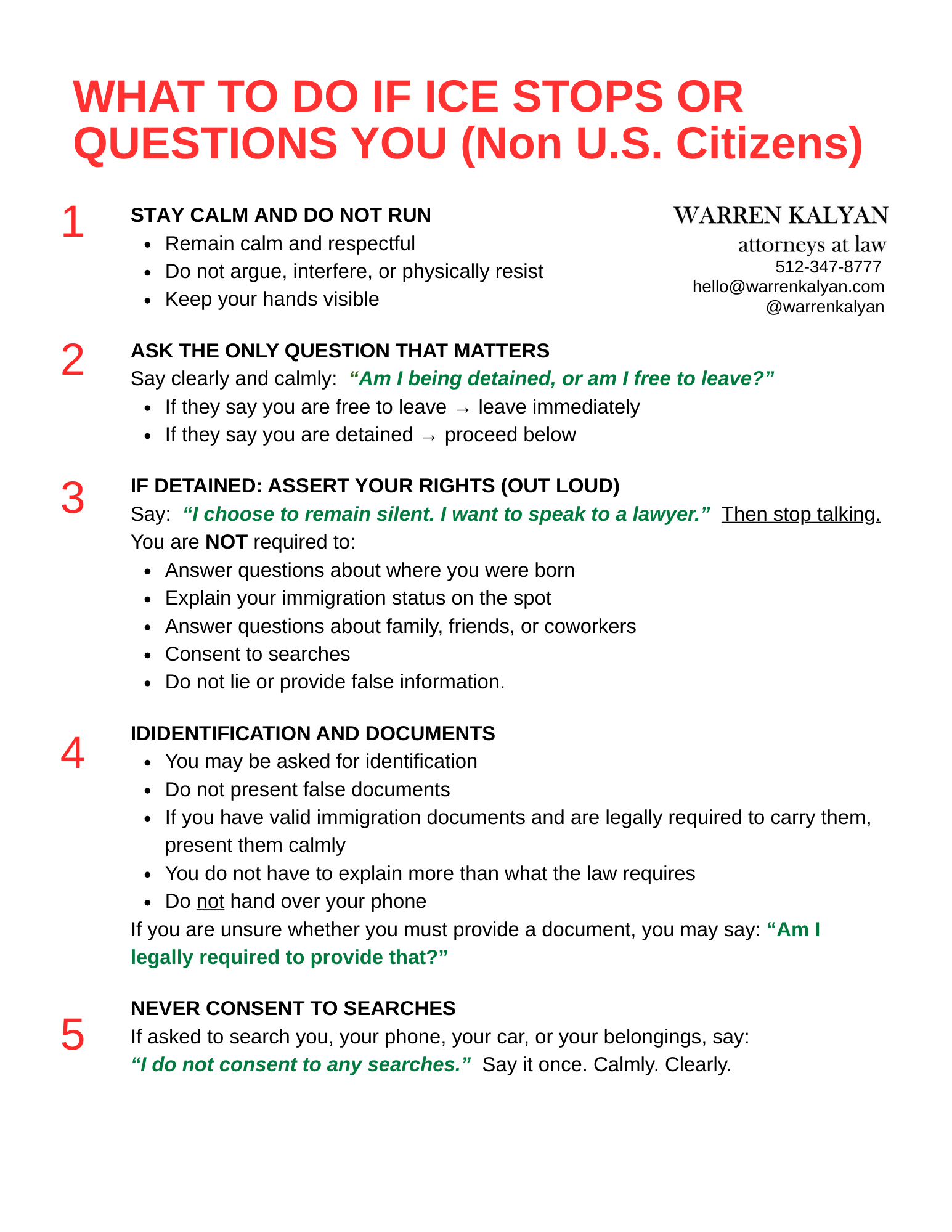
What to do if ICE Stops or Questions You